The Unexpected Key Component to Mastering HEC-RAS 2D Modeling
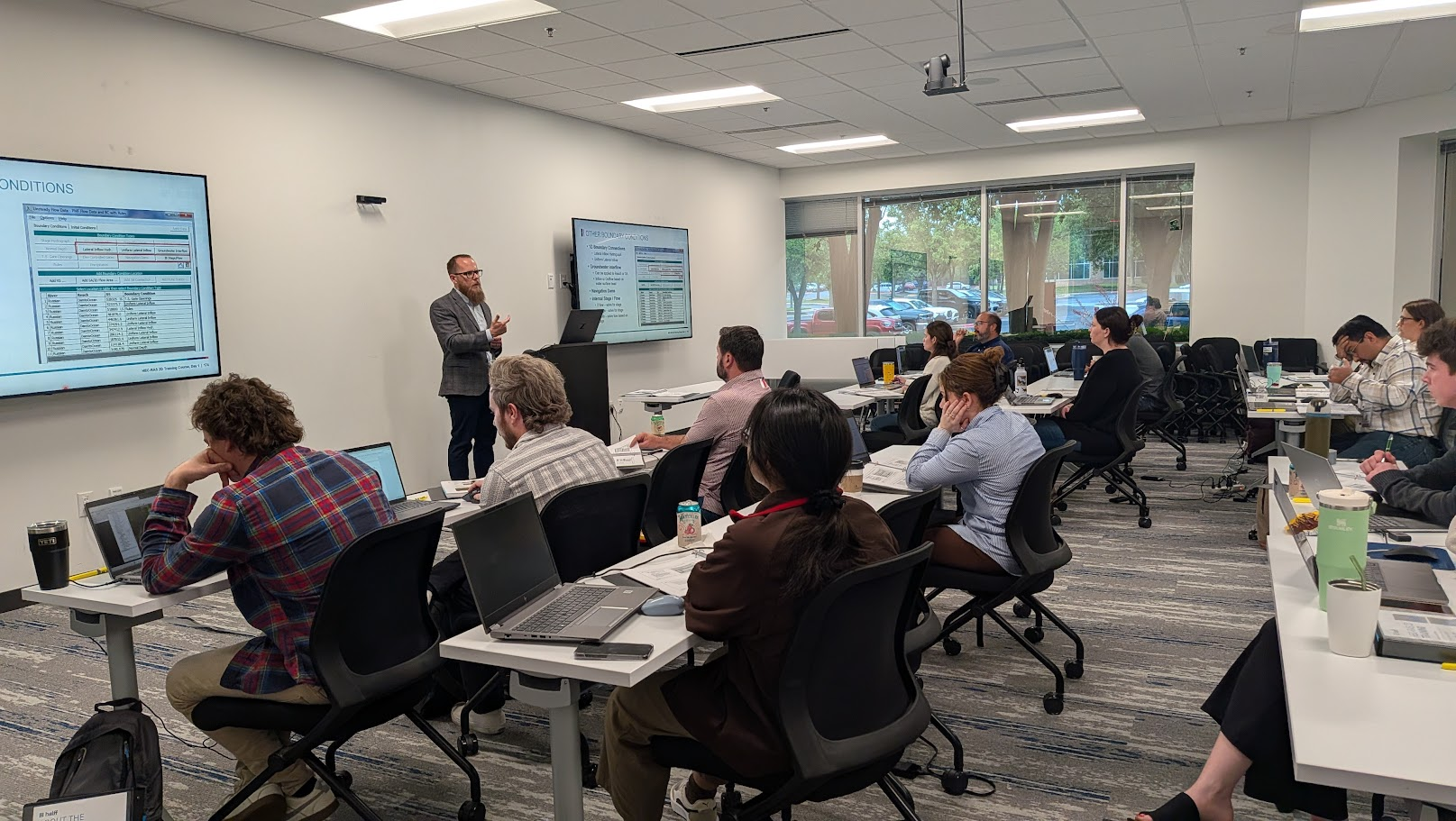 Water Resources Project Manager Ryan Londeen co-leads a HEC-RAS 2D training with public agency attendees in late April. The training, co-led with Water Resources Team Leader Sunit Deo, covered a wide breadth of skills within two and a half days.
In the decades since the U.S. Army Corps of Engineers first launched its HEC-RAS software, the free tool has evolved from a one-dimensional hydraulic modeling tool into a sophisticated software that continues to rapidly advance.
First released in 1995, HEC-RAS introduced 2D modeling capabilities in 2016. The software is in the midst of a significant evolution into RAS 2025, which will present a modern graphical user interface, a redesigned mesh generation system and a new compute engine.
As this industry modeling tool evolves, up-to-date and hands-on familiarity with how it works has become increasingly essential.
That’s why Halff’s Water Resources Team Leader Sunit Deo and Water Resources Project Manager Ryan Londeen recently hosted a multi-day HEC-RAS 2D training for public agency clients. Hosted at Halff’s North Austin office, the training covered a wide breadth of topics including rain-on-mesh modeling, terrain modifications and a new pipe systems feature.
Halff has provided technical trainings like these for decades, welcoming attendees from public agencies across Texas.
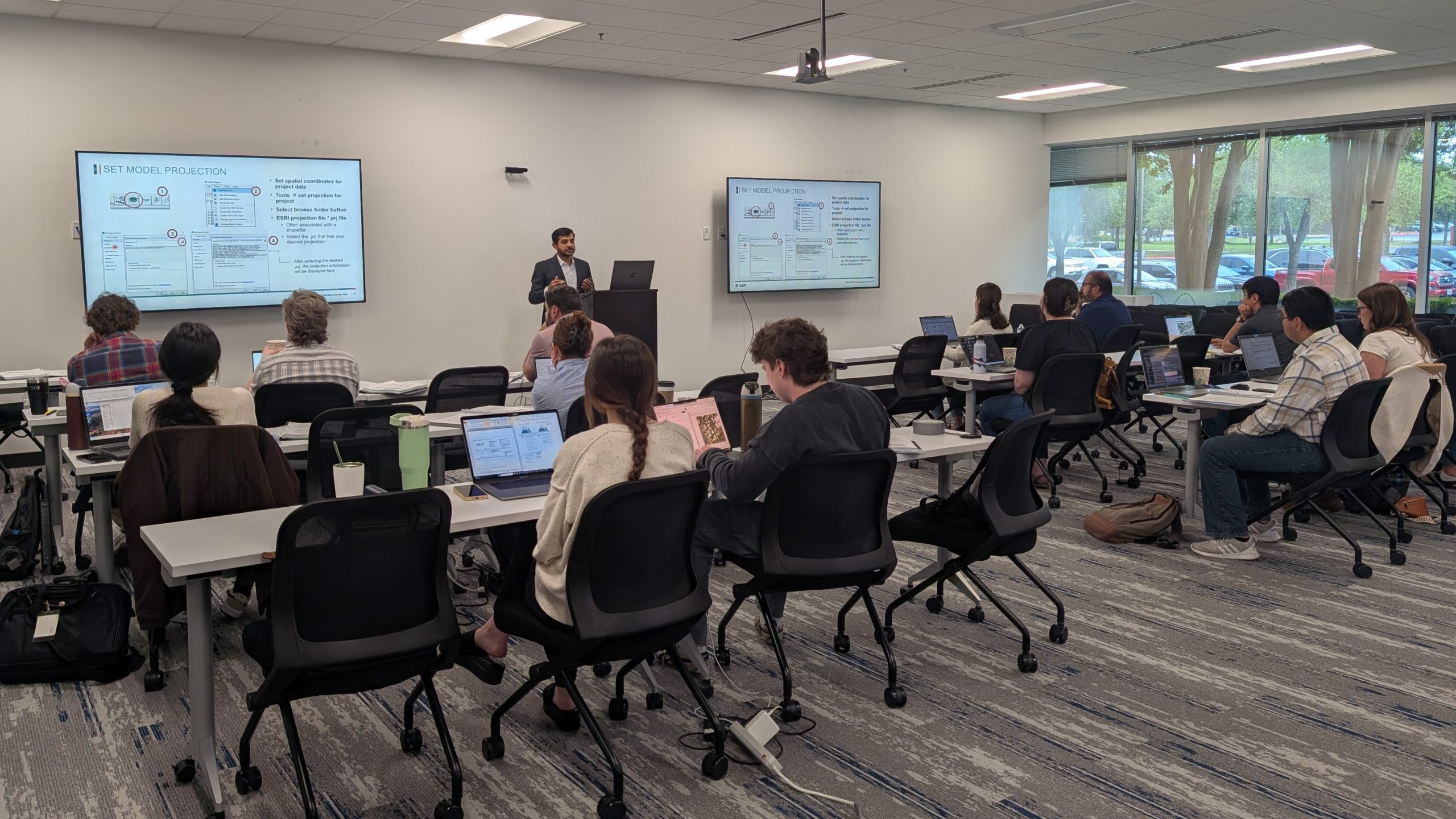 The two and a half day HEC-RAS 2D training held by Halff gave attendees engaging opportunities for mastering an increasingly critical water modeling tool.
The most recent training provided perspectives from Austin-based Deo and Londeen, whose expertise is in the Houston area. Both use HEC-RAS regularly in real-world contexts and know how to cater their training to what attending clients will need for their own projects.
“We know from both the design side and the public agency review side how the software works in a very practical way,” Londeen noted.
Training attendees—who represented the City of Austin, Cedar Park and San Marcos—were guided through hands-on workshops and tool development exercises that instilled key skills in a proactive, engaging way.
“We try to make [it] more hands-on,” Deo said. “We have developed some workshops where trainees use the tools by themselves. We also talk about how they can apply these skills to their projects — we work with these clients, and we know what kind of projects they work on.”
Trainings like these are just one way Halff strives to improve lives and communities through education and engagement. By investing in our partnerships and innovative practices, we are proud to empower our public partners in turning ideas into reality.
Stay up to date on Halff’s training opportunities here.
Recent Stories

Halff’s Ashley Pifer Named WaterWorld Emerging Leader
FAYETTEVILLE, Ark. — Halff Director of Water/Wastewater Ashley Pifer, Ph.D., PE, has been named a 2026 Emerging Leader by WaterWorld…

The Man Behind the Momentum: A Q&A With Halff’s Atlanta Operations Manager Randy Strunk
Randy Strunk is Halff’s Atlanta operations manager, leading efforts to expand the firm’s new office in the region. Randy Strunk has…